
Patients and families
Hospital visits
A therapy dog who adapted after losing a leg, brought by a Doctor of Physical Therapy and a licensed social worker.
At a glance
- Audience
- Pediatric, rehab and long-stay patients, families and staff
- Settings
- Bedside, playroom, family lounge, staff break room
- Length
- 5 to 10 minutes per patient, or 30 to 45 minute group sessions
- Team
- Russ L'HommeDieu, DPT, and Karen L'HommeDieu, LMSW, with Daisy
- Cost
- Free or donation-based in Tampa Bay
What happens
- 1
Before
We complete your volunteer or animal visitation process and confirm units, times and patient consent with your team.
- 2
Arrival
Check in, hand hygiene, and a quick huddle with the unit's child life or nursing contact.
- 3
Optional
Here Comes Daisy sing-along in the playroom, played softly or skipped on quiet units.
- 4
Visits
Short bedside or small-room visits, or a playroom read-aloud, in the order your staff chooses.
- 5
Wrap up
Hand hygiene, a donated signed book for the unit library, and a quick debrief.
What they take away
- Comfort and a lift in mood for patients, families and staff.
- A real-life example of adapting after amputation or injury, especially meaningful on rehab, orthopedic and amputee units.
- A calm, structured visit that fits your unit's routine and infection control rules.
Visit formats
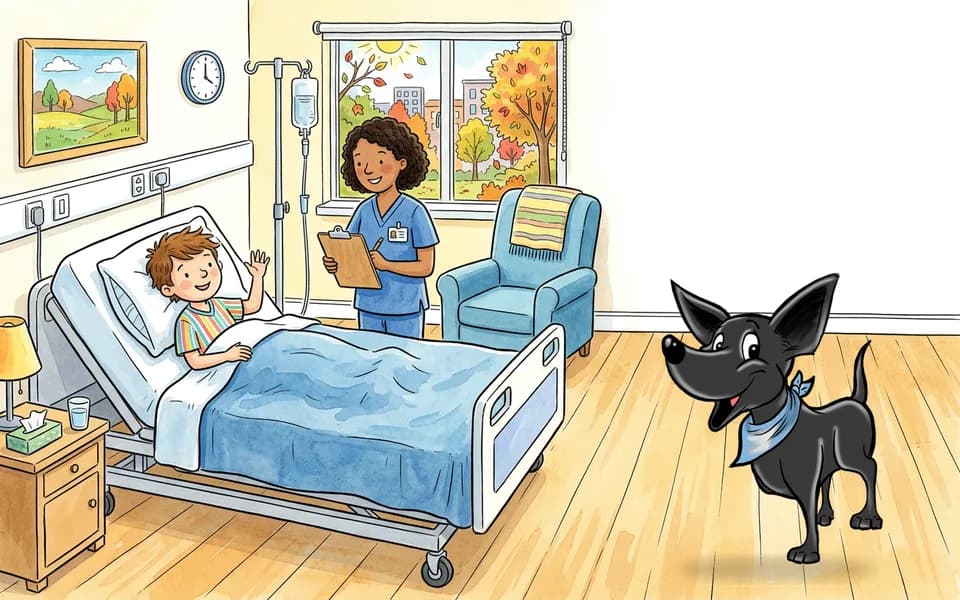
- Bedside visits: brief one-on-one time with Daisy for patients the care team selects.
- Playroom read-aloud: a Daisy story and Q and A for children who can gather.
- Family lounge story time: a break for siblings and parents.
- Staff wellness visit: a short decompression stop for nurses, therapists and staff.
- Draw Daisy activity: single-use supplies that each patient keeps.
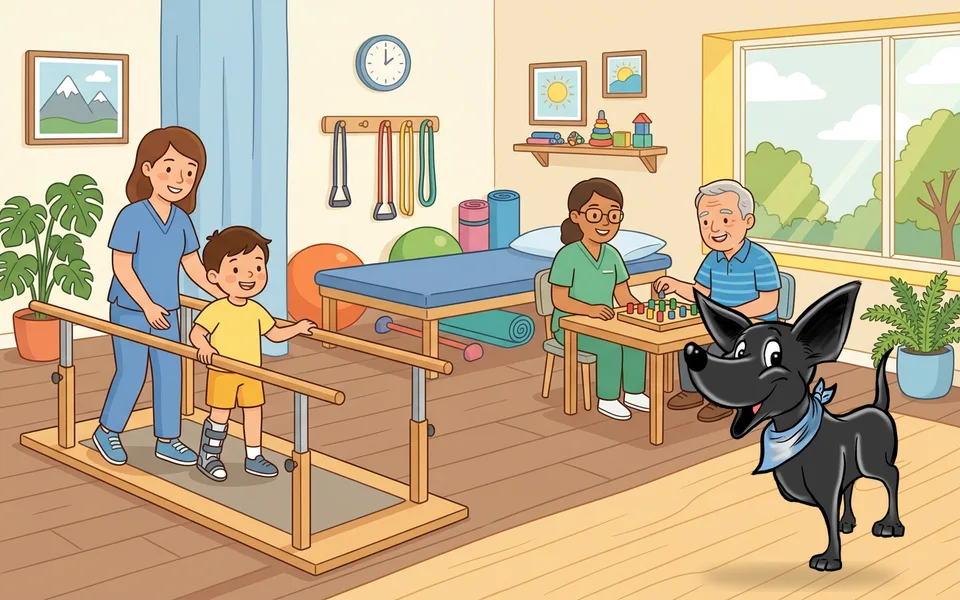
- Goal-directed animal-assisted therapy with your PT, OT and SLP team. See the rehab clinics page.
Safety and infection control
We follow your facility's policies first. Documents are available to your volunteer services or infection prevention team on request.
- Daisy is a Canine Good Citizen and certified therapy dog, always leashed and handled by a trained team.
- Therapy dog registration and liability insurance documentation available on request.
- Current vaccinations and veterinary health screening on file.
- Daisy is bathed and groomed within 24 hours of every visit.
- Hand hygiene before and after every patient contact, for patients, families and our team.
- No visits to isolation rooms or any patient the care team says no to.
- Patient or guardian consent first, and touching Daisy is always optional.
- Single-use art supplies, and magnet buttons on request (our standard buttons have pins).
Watch before your visit
Share these with your class or guests ahead of time. Get the Here Comes Daisy lyrics
Watch Daisy Run Like a Rabbit
Goes with Daisy's Different.
Yes! You Can!!
Channel 4's Rio 2016 Paralympics trailer, a favorite for talking about adapting.
What you provide
- A staff contact who escorts us on the unit
- Your volunteer or animal visitation onboarding steps
- A list of units and patients cleared for a visit
- A space for a group read-aloud if you want one
Related programs
Add this to your visit
 Add-on or standalone
Learn to Draw Daisy draw-along
A guided, step-by-step drawing session. Every child leaves with their own Daisy, three legs and all.
See the details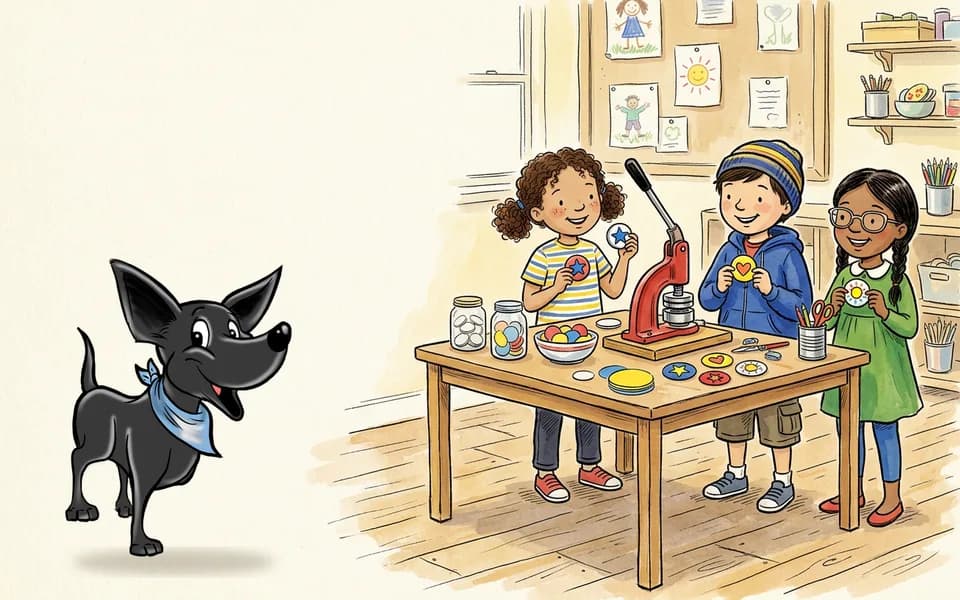 Add-on or standalone
Button making station
Kids design a Daisy button and press it themselves, with a little help. A crowd favorite at events.
See the detailsQuestions about this visit
What do you need from our infection prevention team?
Your animal visitation policy and any onboarding steps. We will send our documentation and follow your hand hygiene, screening and unit restrictions.
Why does it matter that Daisy has three legs?
Patients facing amputation, injury or long recoveries see a dog who adapted and thrives. Russ, a physical therapist, can talk with patients and families about how Daisy moves.
More answers on the main visit page.
Request this visit
Takes about 2 minutes. We reply within 2 business days.